For Clinical Trial Study Sponsors (Researchers) embarking on medical research with human subjects, registering an accurate Research Study Protocol is paramount.
Data submitters struggle to complete the protocol registration process so they can enroll a study with the NIH.
Role
Year
Deliverables
- Information Architecture
- Taxonomic Modeling
- UX & Content Policies
- Wireframes
- Prototypes
- UX Research Synthesis
- Stakeholder Interviews
- Heuristic Audits
- Journey Mapping
- Backlog Integration
- Cross-Functional Workshops
- Product & Design Requirements
- Technical & Design Specifications
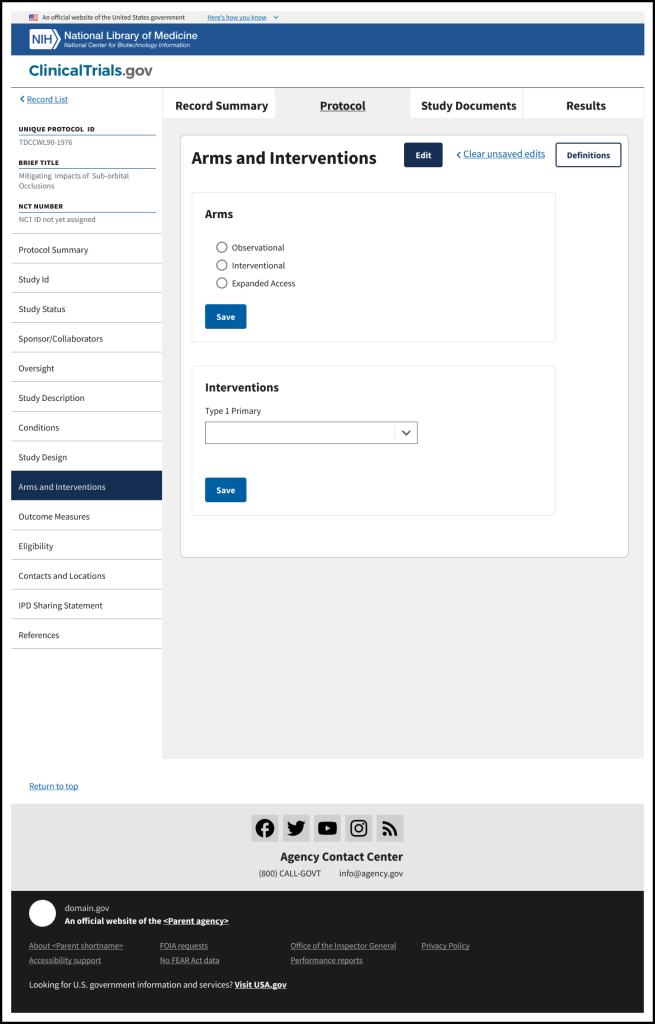
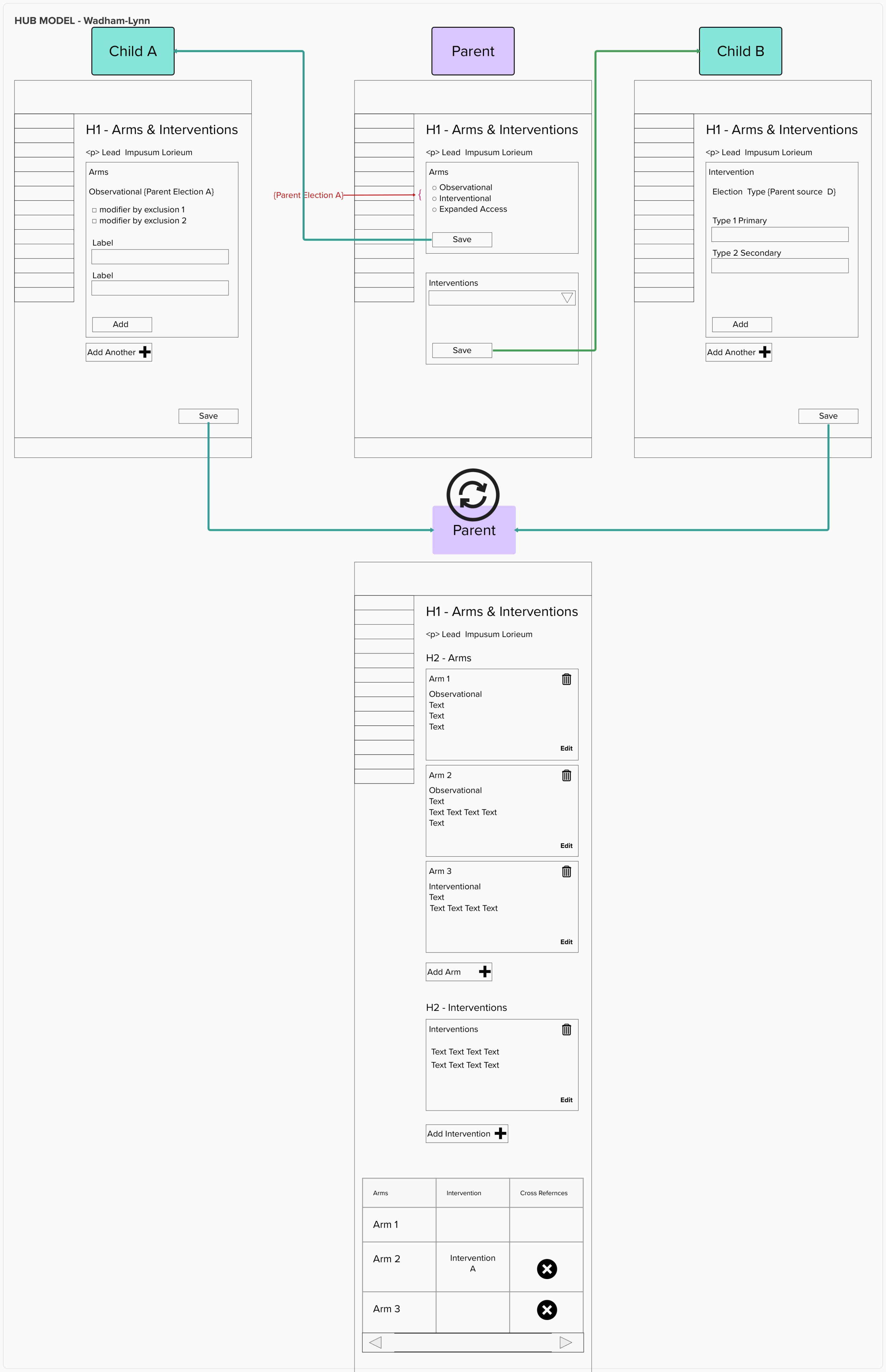
The Outcome: A Parent-Child ‘Hub Model’ architecture that resolved a 13% protocol submission failure rate
Service Modernization:
Modernize the protocol registration submission process for Data Submitter. Optimize the end-to-end PRS service experience.
Information Architecture:
Institute an intuitive, accessible information architecture and taxonomic structure that scales with complex study data.
Human Factors:
Employ modern human factors principles and standardized UI conventions to eliminate task friction and cognitive load.
Tactical Objective: Resolving a 13% Submission Failure Bottleneck
ClinicalTrials.gov is the world’s largest publicly accessible database of privately and publicly funded clinical trials.
By refactoring the legacy workflow around a modernized information architecture, an event-driven technical infrastructure, and enforceable UX policies, we streamlined form completion and directly increased QA submission acceptance rates..
Product Strategy & Backlog Ownership: Coached the Product Owner on evidence-based feature prioritization, translating heuristic audits and user research directly into actionable design stories within the Agile backlog.
Lean UX & Cross-Functional Delivery:
Sponsored iterative discovery workshops and rapid prototyping milestone reviews, synchronizing engineering, business analysis, and content strategy cadences to keep delivery moving to “Done.”
Research & Architectural Governance:
Scheduled and executed ongoing UX research and usability testing while establishing system-wide UX policies to govern engineering implementation.
Service Ecosystem
1. Environment (The Regulatory Domain)
Clinical research involving human participants requires strict federal oversight. The National Institutes of Health (NIH) mandates that all active clinical trials be formally registered to ensure public transparency, patient safety, and regulatory compliance.
2. System (The Technical Platform)
The Protocol Registration and Results System (PRS) is the core data-entry and review gateway powering ClinicalTrials.gov. It manages complex study protocol ingest, quality assurance (QA) reviews, and public reporting updates.
3. Actors (The Primary Users)
Data Submitters & Responsible Parties (RPs): Clinical study sponsors, principal investigators, and regulatory coordinators who must navigate PRS to submit complex protocol data, resolve QA review comments, and maintain study compliance.
Process & Task Decomposition
Who We Designed For: The Responsible Party (RP)
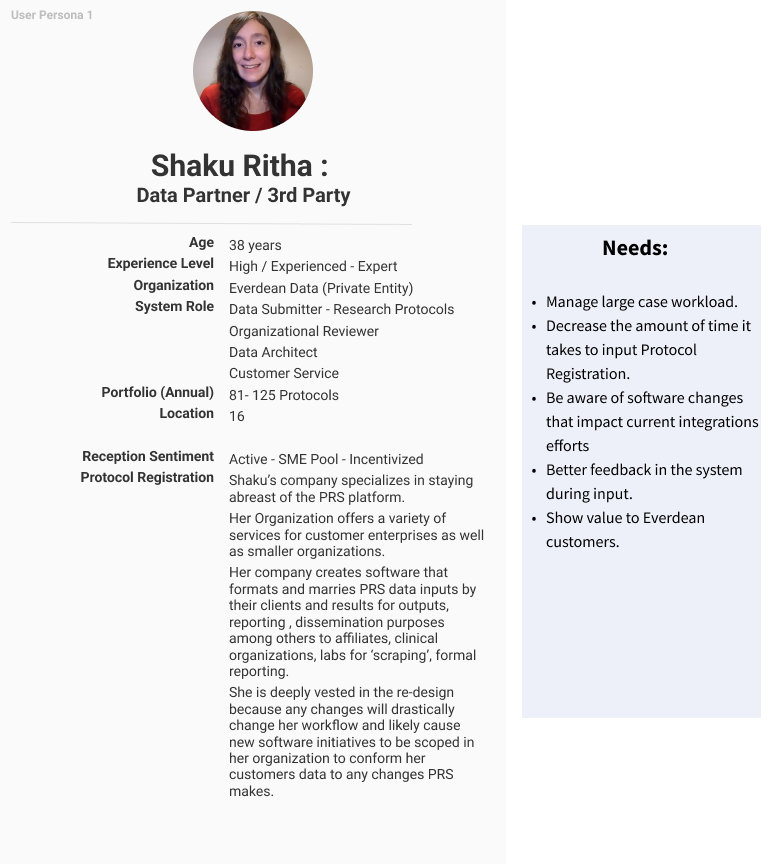
The Job-to-be-Done: “Arms & Interventions” Protocol Input
The primary objective was straightforward: accurately enter complex clinical trial Arms (the study groups) and Interventions (the specific drugs, therapies, or devices being administered) into a structured protocol record.
In clinical trials, an error in how an intervention maps to an arm invalidates the entire protocol, making high accuracy mandatory.
Where the Legacy Service Failed Users
Analysis of user feedback and QA rejection logs revealed three recurring friction points driving the 13% submission failure rate:
- High Wayfinding Overhead: Complex, hidden navigation paths required to locate the task within the overall protocol record.
- Fragmented Task Architecture: Disjointed page-by-page flow that obscured the relationship between parent protocols and child data entries.
- Opaque System Feedback & Poor Error Recovery: Absence of inline validation or contextual error messaging, forcing users to submit blind and discover errors only after formal QA rejection.
Journey Mapping: Quantifying Compounding Task Fatigue
Walking through the legacy workflow revealed severe structural friction:
9+ Distinct Screens:
Completing a standard Arms & Interventions sequence required navigating through a minimum of 9 separate screens, each with multi-step sub-tasks.
Compounding Task Overhead:
In clinical trial protocols, dependencies scale dynamically (n+1).
Complex protocols frequently require 30 or more data amendments, forcing users to repeat this convoluted 9-screen loop dozens of times for a single study.
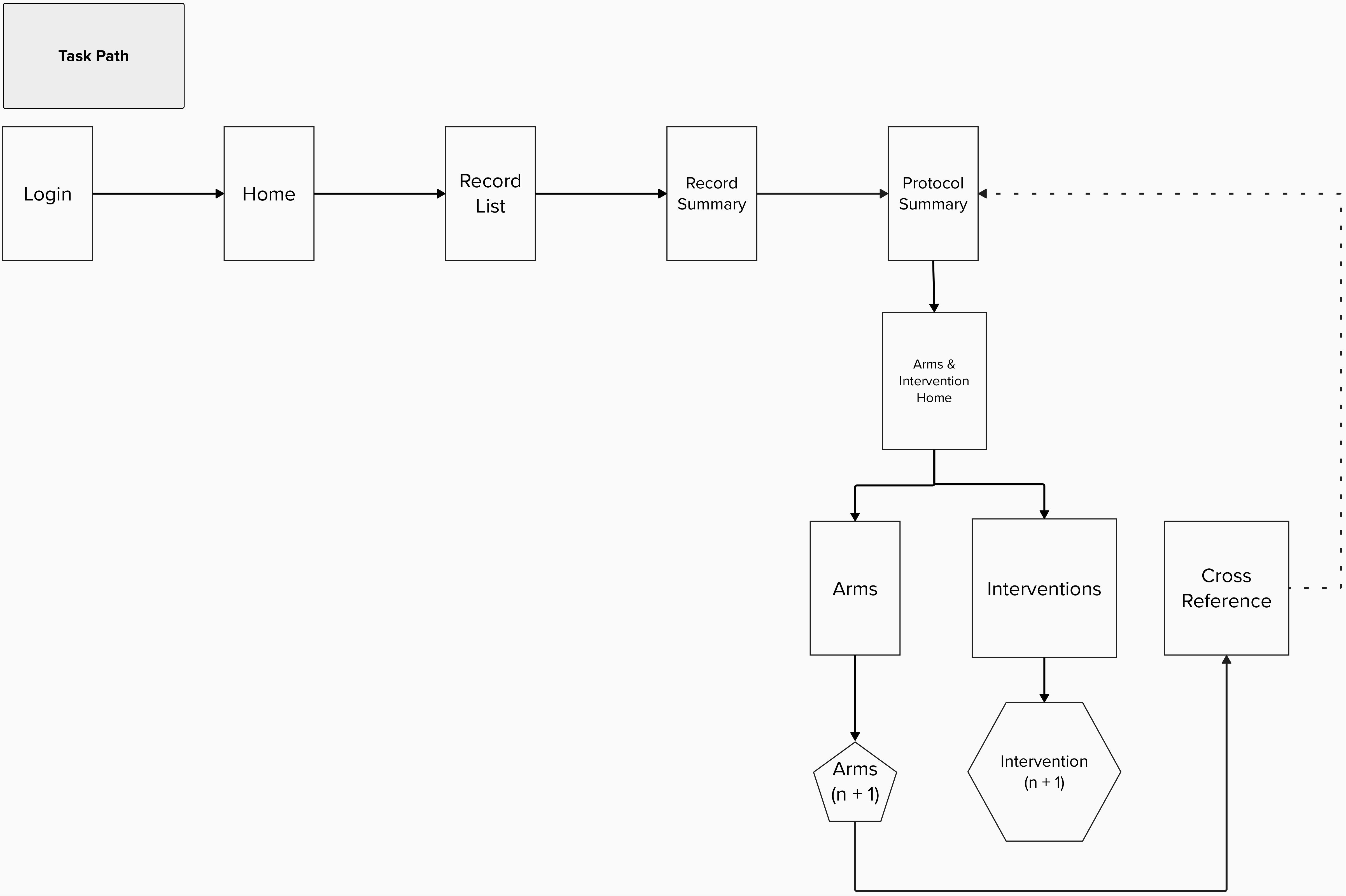
Click Path Analysis: Exposing Navigational Yo-Yoing
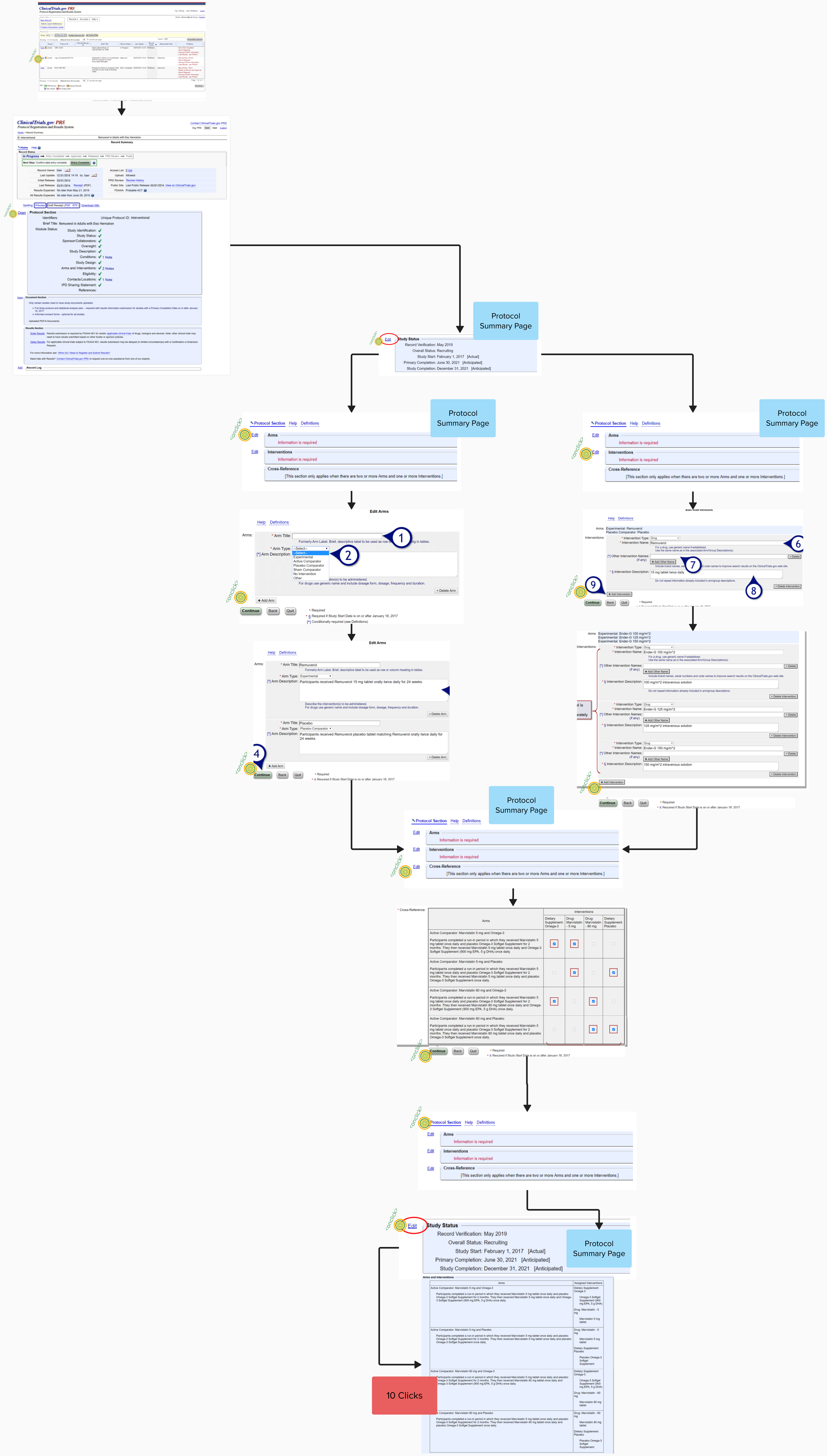
I mapped the exact click path to quantify the navigational overhead imposed on submitters:
10+ Pre-Task Clicks: Submitters had to execute at least 10 clicks through nested menus just to reach the first input field of the form.
Violations of Locality & Proximity: Users are forced to navigate up, down, back, and forth across disconnected branches of the legacy IA, creating disorientation and mental fatigue before data entry even begins.
Taxonomical Swimlanes: Proving the Case for Structural Refactoring
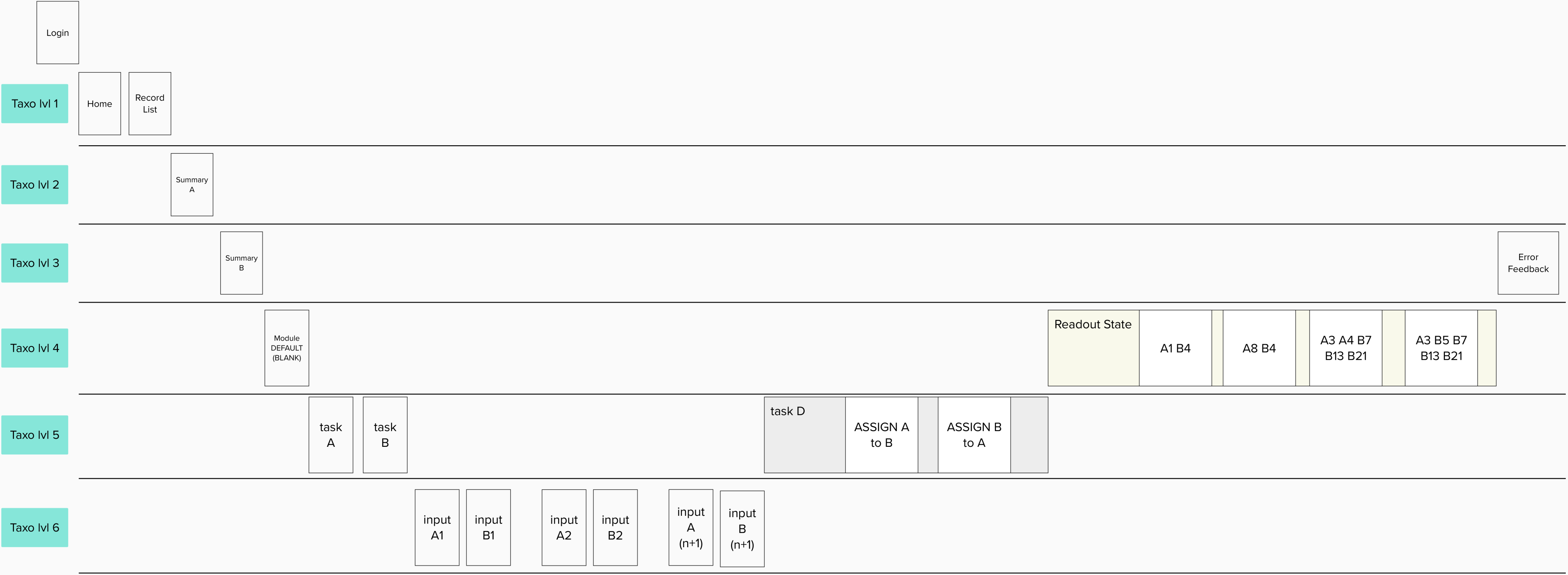
Mapping the taxonomic depth across functional swimlanes gave our team the hard evidence needed to make a pivotal product decision:
Systems Mapping: Synchronizing UX with Event-Driven Architecture
To ensure design aligned with modern technical modernization goals, I mapped system interactions alongside technical trigger points:

Supporting Event-Driven Architecture:
Captured technical dependencies and asynchronous trigger points to support engineering’s migration to modern backend services.
Interaction Audit:
Conducted a comprehensive UI content audit so no legacy rules or edge cases were dropped during migration.
Genesis of Usability Policies:
These system-level discussions highlighted that fixing the UI alone was insufficient; we needed global, system-wide rules to govern how data saves, validates, and persists across the service.
Information Architecture: Restructuring the Taxonomic Hierarchy
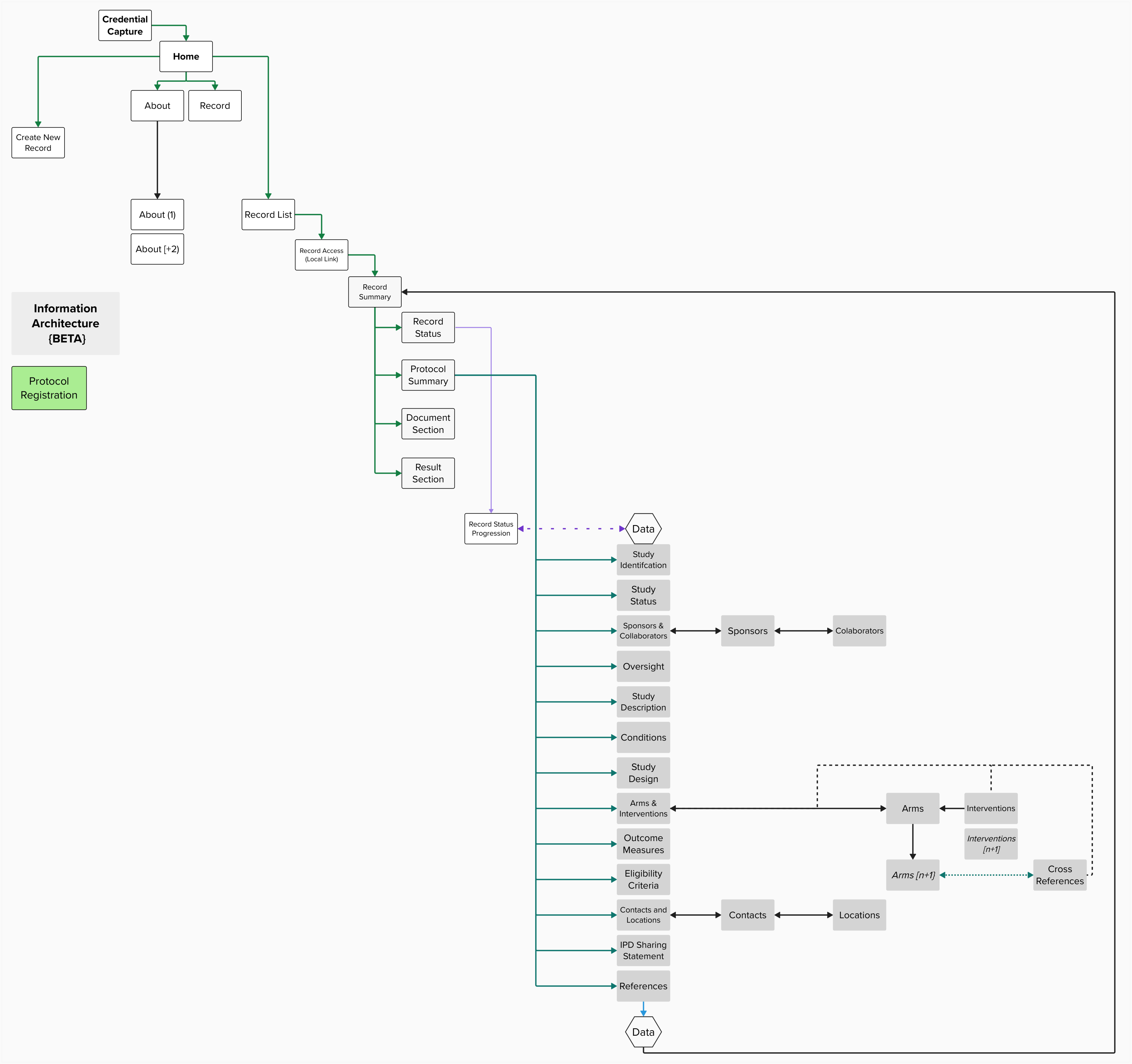
Validated through card sorting, tree testing, and journey mapping, I authored a comprehensive Beta Information Architecture that collapsed navigational depth and unified fragmented form flows.
- Hybrid Hierarchical Baseline (Levels 1–3): Re-architected global navigation so primary protocol sections remain discoverable without burying sub-tasks.
- Sequential Local Flows: Transformed erratic form entry into predictable, step-wise sequential progressions for complex clinical inputs.
- Hub-and-Spoke Status & Views: Centralized the crucial “Record Summary” and “Views” functions into an accessible central hub, rectifying a major legacy point of confusion.
- Localized Task Encapsulation: Fully nested the Arms & Interventions flow within its immediate operational context.
- Asynchronous DOM State Updates: Paired the new IA with event-driven backend calls, providing instant inline DOM feedback and real-time state persistence.
Key Architectural Win:
Eliminating Taxonomic Thrashing
In the legacy system, users had to traverse up and down 6 hierarchical levels just to verify form entries.
The Beta IA collapsed this entire journey into a single, cohesive task locale.
Usability Policies: Establishing Systemic Behavioral Consistency
A modern interface cannot succeed if underlying system behaviors remain unpredictable.
I authored a governance framework that tied UI components, backend data warehousing, and error states into enforceable, repeatable rules.
The Governance Framework:
Collaborating closely with my Business Analyst, Lead Engineer, and Product Owner, I sponsored a series of cross-functional alignment workshops to establish codified system standards:
The Save Policy:
Standardized button states, persistence triggers, session timeout handling, and data warehousing ingestion rules.
Error Handling & Recovery
(Co-authored with Sr. Designer):
Shifted validation from delayed, multi-screen redirects to immediate, contextual inline error notifications.
Session & Navigation Guardrails:
Prevented data loss during abrupt tab closures, logouts, or multi-tab editing sessions.
- Button Labeling, Visual States & Placement Hierarchy
- Real-Time Data Ingestion & Validation Parsing
- Session State Management & Auto-Save Triggers
- Resilient Log-In / Log-Out Data Recovery
- Asynchronous Data Warehousing Persistence
- Contextual Usability Guidance & Feedback Loops
The “Hub Model”: A Reusable Parent-Child Design Pattern
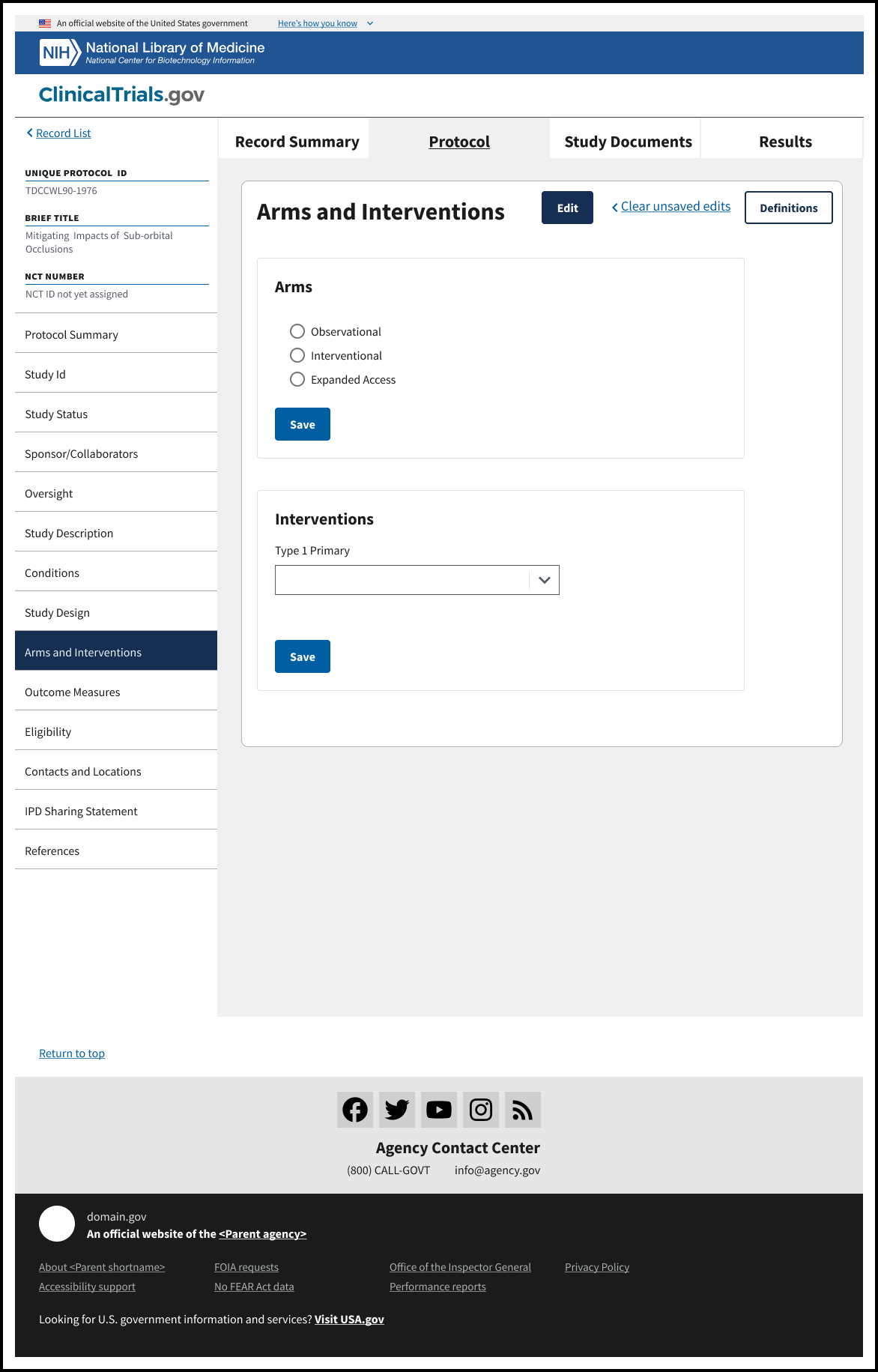
To resolve the complex (n+1) data entry requirement where protocols demand dozens of interrelated amendments, I designed a core service delivery pattern: The Hub Model.
Grounded in fundamental programming architecture, the Hub Model establishes an intuitive Parent–Child relationship at the page level:
Final Delivery: Production Specifications & Team Adoption
Through rigorous prototype reviews, stakeholder alignment sessions, and engineering feasibility checks, this solution was formally adopted across the program.
The resulting design established a validated production standard: eliminating 10+ clicks of navigational overhead, replacing 9 disconnected screens with an intuitive Hub loop, and directly targeting the 13% QA submission failure rate.
Retrospective: Delivering Impact at Federal Scale
Bridging the natural friction between product backlogs, engineering constraints, and user advocacy was essential.
By grounding discussions in objective behavioral data, such as click-path maps and taxonomic swimlanes, I moved the organization from subjective opinions to a shared architectural vision and drove consensus to reach a production-ready “Done” state.
By addressing the root causes of the 13% protocol submission failure rate, this effort directly removed friction for clinical researchers and regulatory coordinators under strict trial launch timelines.
Beyond solving the immediate Arms & Interventions workflow, the Hub Model and formalized Usability Policies (Save Policy, Inline Error Handling) established a reusable service pattern that continues to guide modernization across the broader ClinicalTrials.gov ecosystem.
